Tissue Engineered Disease Models
-
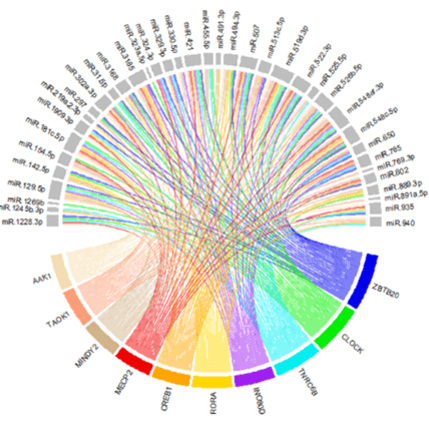
Multi-Omics Aging Studies of Cardiac Tissue Extracellular Vesicles
Aging is a major risk factor for cardiovascular disease (CVD) and many other high-mortality diseases. We aim to develop both unique biomarkers which can provide a quantitative assessment of cardiac age and risk of aging-related CVD as well as develop novel, endogenous therapeutics which can prevent, reverse, or otherwise mitigate the impact of chronic CVD.
-

Macrophages and Myocardial Metabolism
Macrophages have been shown to have great influence over cellular behaviors in the heart, both in homeostasis and in disease. We develop stem cell-derived models of cardiac macrophage effects on the myocardium and the cells within, including applying our myocardium-on-chip to measure the effects of macrophages on the heart in heart attack conditions.
-
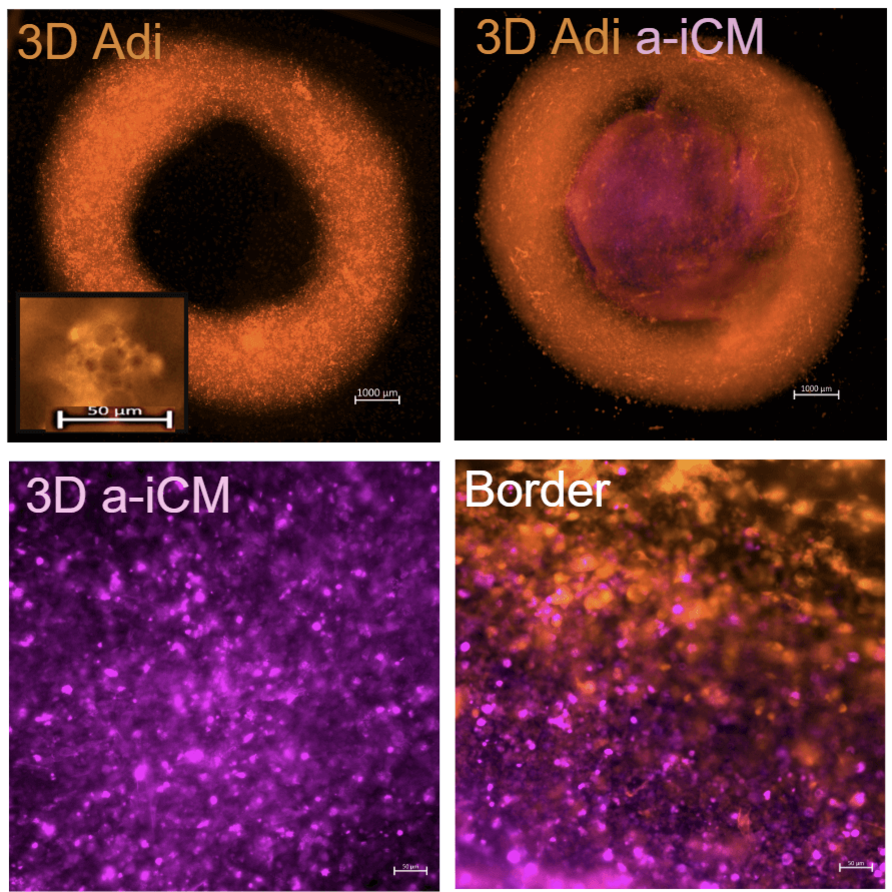
Engineered Fat-Myocardium Model to Study the Role of Obesity in Myocardial Dysfunction
Cardiovascular diseases are the most common obesity-related comorbidities. We have engineered a platform that enables the investigation of both physical and paracrine interactions in an obese heart, and we are using it to test different treatment strategies for obesity-related cardiac dysfunction.
-

Heart-on-a-Chip using Human Stem Cells
Human induced pluripotent stem cells (hiPSCs) have recently emerged as a way to study human biology. In the Zorlutuna Lab, we use tissue engineering to develop and characterize 3D hearts-on-a-chip to study human cardiovascular disease in vitro.
-

Aging Breast Cancer Models
Aging is a major yet underexplored factor in cancer progression, particularly through its impact on the extracellular matrix (ECM). Our lab investigates how the aged ECM drives invasive, cancer-like behavior in mammary epithelial cells, revealing novel cues and potential therapeutic targets for cancer prevention and treatment.
-
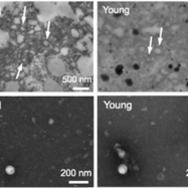
Matrix Bound Vesicles
Our lab has identified matrix-bound vesicles (MBVs) as a novel subset of extracellular vesicles embedded within the breast microenvironment. Our research reveals that MBVs change with age, acquiring cancer-promoting characteristics that regulate cell behavior and drive breast cancer progression and metastasis.
-
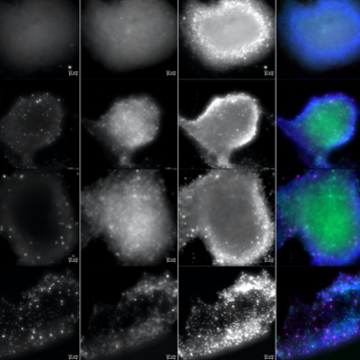
Novel 3D Bioprinting Breast Cancer Models
Using 3D bioprinting technology, we engineer breast tissue models that mimic both tumor and tumor-adjacent environments, enabling precise investigation of how spatial context influences cell behavior. By studying extracellular vesicle (EV) production in printed stromal models with distinct fibroblast populations, we uncover how proximity to tumors alters intercellular communication in ways that may drive cancer progression.
-
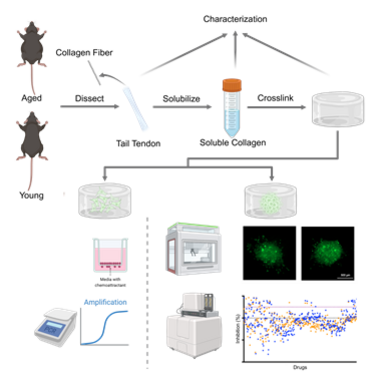
High-Throughput Drug Studies
With animal-sourced biomaterials, we develop 3D age-mimetic in vitro platforms that replicate the biochemical, mechanical, and cellular characteristics of aged breast tissue. These models enable high-throughput drug screening under age-relevant conditions, revealing age-specific therapeutic responses and resistance mechanisms to guide drug repurposing and precision medicine for older patients.
-
-
-
-
-
-
-